Young chicks need warm, stable temperatures. Wood pellet heaters give poultry farmers a dry and economical source of heat for brooding and winter production.
Why dry heat matters
Direct gas heaters release water vapour into the house. Pellet heaters with heat exchangers deliver dry heat and send combustion gases outside, which helps keep litter dry and reduces ammonia.
Benefits for farmers
- Lower fuel cost compared with many fossil fuels.
- Drier litter and better air quality.
- Automatic feeding with thermostat control.
- Renewable fuel from wood residues.

Brooding temperatures
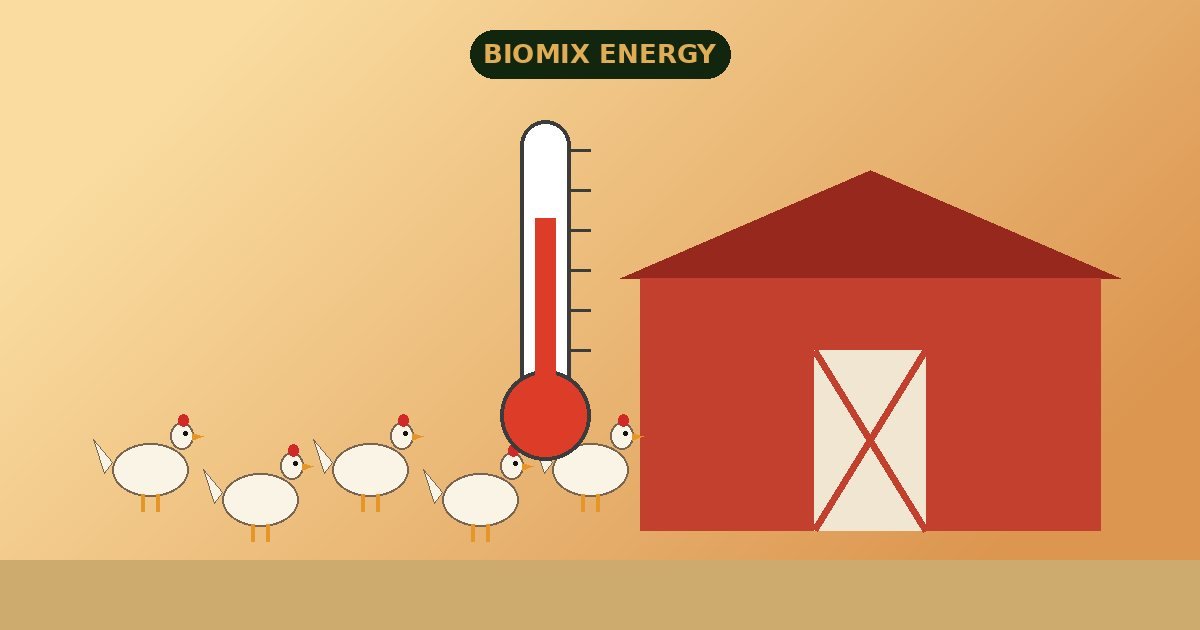
Day-old chicks generally need around 30–33 °C at bird level, reduced gradually as they grow. Follow the guidelines of your breed company and use thermometers at chick height, not only near the ceiling.
Pellets and bedding work together
Dry heat plus a good bedding layer is the best combination. Our wood shavings for poultry bedding guide explains how deep the litter should be.
Practical tips
- Keep a reserve of pellets on the farm before winter.
- Clean the heat exchanger and burner regularly to keep efficiency high.
- Check CO and CO₂ levels and ventilation.
Frequently asked questions
Are pellet heaters safe for poultry houses?
Yes, if installed correctly with exhaust outside the house and regular maintenance.
Can pellets reduce ammonia?
Indirectly – dry heat keeps litter drier, and dry litter releases less ammonia.
Which pellets should I use?
Use clean, low-ash wood pellets to avoid clinker and stoppages.
Need a quote from Biomix Energy?
We manufacture and export wood pellets, charcoal, firewood, wood chips, olive pits, animal bedding and alfalfa from Damietta, Egypt. Tell us the product, quantity and destination port.