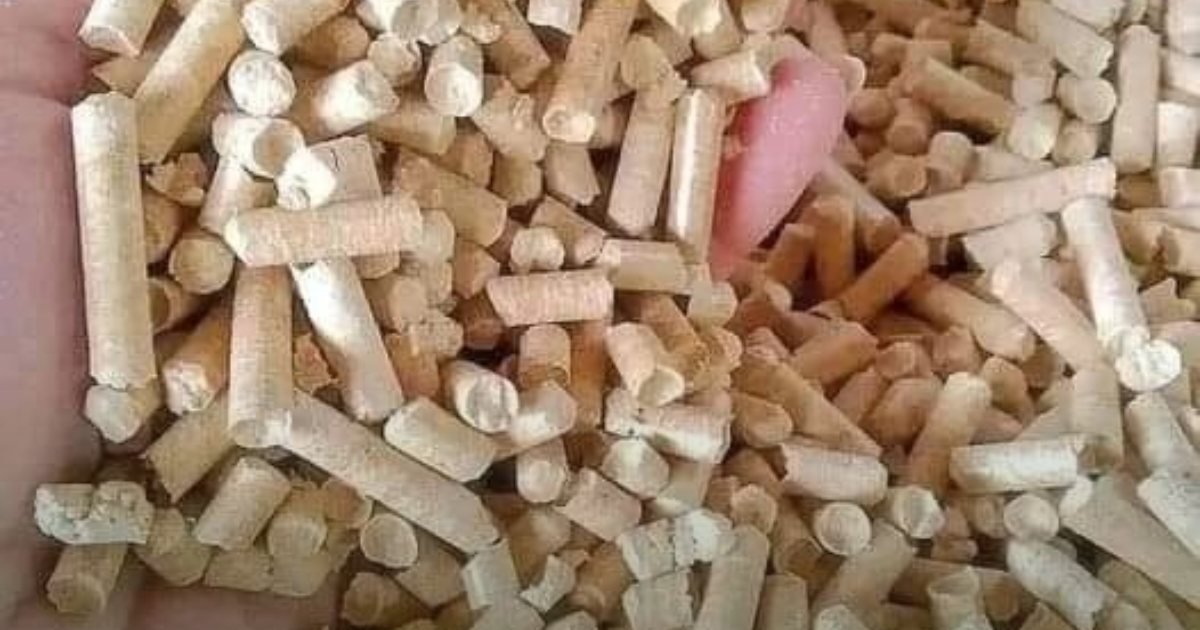
Every serious pellet offer comes with a specification sheet. If you are new to the market, the list of parameters can be confusing. Here is what each value means, why it matters and what to look for in premium heating pellets.
Typical premium pellet specification
| Parameter | Premium target (A1 level) | Why it matters |
|---|---|---|
| Diameter | 6 ± 1 mm or 8 ± 1 mm | Must match the stove or boiler |
| Length | 3.15–40 mm | Even feeding, no jams |
| Moisture | ≤ 10% | Heat output and durability |
| Ash | ≤ 0.7% | Cleaning frequency, clinker risk |
| Net calorific value | ≥ 16.5 MJ/kg (≈ 4.6 kWh/kg) | Energy per kilogram |
| Mechanical durability | ≥ 98.0% | Resistance to breaking |
| Fines | ≤ 1.0% | Dust, feeding problems |
| Bulk density | 600–750 kg/m³ | Storage and transport efficiency |
| Nitrogen / Sulphur / Chlorine | ≤ 0.3% / ≤ 0.04% / ≤ 0.02% | Emissions and corrosion |
| Ash deformation temperature | ≥ 1200 °C | Clinker formation |
Moisture content
Water does not burn – it uses energy to evaporate. Premium pellets are below 10%, often 6–8%. Lower moisture also means stronger pellets.
Ash content
Ash is the mineral residue left after burning. Clean debarked wood gives very low ash. Bark, sand and soil raise it. High ash means more cleaning and a greater risk of clinker.
Calorific value (NCV vs GCV)
The gross calorific value (GCV) includes the heat recovered by condensing water vapour; the net calorific value (NCV) does not, and is the practical figure for most appliances. Premium pellets typically reach 17–19 MJ/kg NCV, or around 4.7–5.2 kWh/kg. As a rule of thumb, about 2 kg of pellets replace 1 litre of heating oil.
Mechanical durability and fines
Durability is tested by tumbling pellets and measuring how much breaks. 98% durability means only 2% turns into fines in the test. High durability matters because pellets are handled many times between factory and burner.
Bulk density
Bulk density is the weight of a cubic metre of loose pellets. Higher density means more energy per container and per storage room.
Chemical elements
Nitrogen affects NOx emissions; sulphur and chlorine can cause corrosion and acid emissions. Clean wood naturally stays well within limits.
Ash deformation temperature
This shows the temperature at which ash starts to soften. If it is too low, ash melts in the burner and forms clinker. Clean softwood ash usually has a high melting point.
Biomix Energy can share specifications and lab reports for our premium wood pellets on request.
Frequently asked questions
What is a good calorific value for wood pellets?
At least 16.5 MJ/kg net (ENplus minimum). Premium pellets often reach 17–19 MJ/kg, about 4.7–5.2 kWh/kg.
What is the ideal moisture content for wood pellets?
Below 10%. Many premium pellets are between 6% and 8%.
What does 98% durability mean?
In a standard tumbling test, 98% of the pellet mass stays intact and only 2% breaks into fines.
How many kg of pellets equal 1 litre of heating oil?
Roughly 2 kg of wood pellets contain the same energy as 1 litre of heating oil.
Need a quote from Biomix Energy?
We manufacture and export wood pellets, firewood, wood chips, charcoal, olive pits, animal bedding and alfalfa from our factory in Damietta, Egypt. Tell us the product, quantity and destination port and we will reply with specifications and a price.